
 Depending on the continent and climate zone, natural fibers grow all year round. The dependence on local and global weather influences changes the quality and quantity of the fibers at the time of harvest or during and after cleaning and processing.
Geopolitical or regional events are other factors affecting the availability of natural fibers. In the case of statistical evaluations, it must be taken into account that some regional harvest periods also take place at the turn of the year.
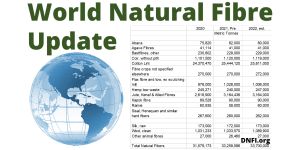
World natural fibre production is forecast at 33 million tonnes in 2026, essentially unchanged from the estimate for 2025 and the actual in 2024.
In 2025, cotton production is estimated by USDA at 26.6 million tonnes, the highest in eight seasons. Jute production is estimated to have fallen to a two-decade low because of adverse weather during the harvest period, and world wool production fell to the lowest mark in a century as farmers shifted to meat breeds. Coir production is estimated at 1.1 million tonnes, and production of all other fibres together is estimated at 2.1 million tonnes in 2025.
Over the last two decades, production of natural fibres ranged between 34.9 and 27.8 million tonnes, with no statistically significant upward trend. Among the individual fibres, production of coir, other fibres nec, flax and hemp have been rising, while abaca, kapok, silk and wool have been declining. Production of cotton has varied, but there has been no significant trend up or down.
Free Download of the 15 page report: “DNFI World Natural Fibre Update November 2026”
Please note the download link send to you will automatically expire after 7 days.
DNFI members can access previous reports here: https://dnfi.org/dnfi-world-natural-fibre-updates/
The DNFI World Natural Fibre Update is provided by: Dr. Terry Townsend, DNFI Statistics and Data Analysis Expert.
Related Posts
