
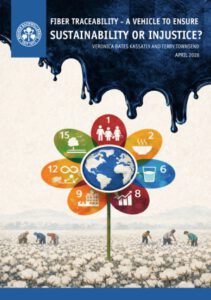
 In a paper published by the Bremen Cotton Exchange in April 2026, Veronica Bates Kassatly and Terry Townsend examine the justifications behind this approach and assess the consequences for textile and apparel sustainability claims and global legislation.
The report, “Fiber traceability – a Vehicle to Ensure Sustainability or Injustice?” is essential reading for anyone and everyone in sustainable fashion, particularly those with an interest in legislation and impact claims.
Polyester accounts for almost 60% of all fibre production, while cotton accounts for a little over 20% and wool 1%. Only 12% of polyester is of recycled origin, and 98% of that comes from bottles diverted from the beverage industry. In essence, recycled polyester is simply virgin polyester that has undergone a single additional step in its production. However, it should be noted that virgin polyester is not subject to any certification schemes.
It is estimated that more than 2500 chemicals, 800 of which are classified as highly hazardous, are utilised, present, or released by the most prevalent form of polyester fibre, PET. In comparison, only 135 highly hazardous chemicals are used worldwide in pesticides applied to cotton. Of particular concern is the fact that a further 1,609 chemicals associated with PET have not been tested and are therefore considered harmless, despite the possibility that they may be hazardous.
The water footprint of one kilogram of polyester fibre is between five and seven times greater than that of one kilogram of cotton.
Approximately 20% of the world’s polyester production is derived from oil or natural gas feedstock that originates in sanctioned countries. The import of polyester textiles and apparel by certain countries may potentially facilitate the circumvention of sanctions.
The report is also available for direct download here.